
Highlights
-
Social and emotional growth acts as the neurological bedrock enabling all subsequent academic achievements and personal resilience.
-
Tailored classroom environments foster emotional intelligence by providing structured zones for independent processing and cooperative group play.
-
Guided peer interactions serve as a real-world laboratory where young learners practice negotiating boundaries.
-
Low student-to-teacher ratios allow educators to provide highly individualized, responsive behavioral support.
-
Intentional classroom strategies help children develop vital self-regulation mechanisms early on.
-
Strong parent-teacher partnerships ensure emotional vocabulary introduced at school is reinforced seamlessly at home.
Why Is Social and Emotional Development the True Foundation of Early Education?
The true foundation of early education is social and emotional development because it establishes the neurological pathways necessary for all future learning and personal resilience. By leading with this core journalistic insight, parents recognize that early schooling must prioritize emotional intelligence over strict academic memorization.
When children learn how to manage feelings and empathize, they unlock the cognitive bandwidth required to focus on complex tasks like early literacy. Without this emotional bedrock, children struggle with the frustrations that accompany learning new concepts. According to the National Association for the Education of Young Children, early social and emotional competence is a profound predictor of a child’s eventual success in formal school settings. Focusing on these internal skills ensures children feel safe and capable within their learning environments. Prioritizing this domain transforms vulnerable toddlers into confident learners prepared to engage dynamically with the world.
How Do Tailored Environments Foster Emotional Intelligence?
Tailored environments foster emotional intelligence by providing distinct physical zones that encourage independent emotional processing and cooperative group play. When educators design a classroom with emotional well-being in mind, the space itself acts as an active participant in social development.
-
Cozy Corners: Quiet, sensory-friendly areas equipped with soft seating allow overstimulated children to safely retreat and self-regulate without feeling isolated.
-
Cooperative Stations: Areas designed for dramatic play require multiple children to work together, forcing them to practice vital turn-taking.
-
Emotional Literacy Materials: Books and posters featuring diverse faces expressing various feelings help children accurately identify their complex internal states.
-
Predictable Routines: Highly structured schedules provide a deep sense of security, significantly reducing the anxiety related to daily transitions.
What Role Does Peer Interaction Play in Building Conflict Resolution Skills?
Peer interaction serves as a vital laboratory where young learners practice negotiating boundaries, sharing resources, and navigating complex feelings. In a structured early childhood setting, minor disagreements over a toy are not viewed as misbehavior, but as essential developmental milestones. When conflicts arise, skilled educators guide students through a mediated conversation rather than solving the problem for them. This process teaches children to articulate frustrations verbally, fostering profound empathy for their classmates’ perspectives. Data from the American Psychological Association underscores that integrating social-emotional learning into daily peer interactions drastically reduces aggressive behaviors. By consistently working through interpersonal friction in a safe environment, children learn that conflict is a normal part of human relationships. They discover that issues can be effectively resolved through compromise and active listening, building a framework for future social success.
How Do Low Student-to-Teacher Ratios Improve Relational Security?
Low student-to-teacher ratios improve relational security by allowing educators to observe subtle emotional cues and respond rapidly with highly individualized support. When classrooms are overcrowded, teachers are forced into a reactive mode of crowd control, making it nearly impossible to address nuanced emotional needs. However, private preschools often intentionally limit class sizes to ensure educators have the necessary time to build deep, trusting bonds with each student. This relational security is paramount; a child must feel fundamentally safe before they will take the social risks required to make friends. Because teachers in private preschools closely monitor social dynamics, they proactively intervene when a child appears overwhelmed, guiding them back into group play gently. This intense level of personalized attention effectively validates the child’s emotional experiences, thereby building a secure attachment style promoting independent exploration.
Which Specific Classroom Strategies Help Children Learn to Self-Regulate?
Educators utilize a variety of intentional, evidence-based classroom strategies to help children accurately identify their emotions and employ healthy coping mechanisms when distressed.
-
Emotion Modeling: Teachers deliberately narrate their own feelings and coping strategies out loud, showing children that it is perfectly normal to experience frustration and recover peacefully.
-
Mindfulness and Breathwork: Incorporating deep breathing exercises into daily circle time gives children tangible, physical tools to calm their nervous systems during moments of high stress.
-
Validating Big Feelings: Instead of dismissing a child’s anger, educators acknowledge the validity of the emotion before guiding them toward a more appropriate behavioral response.
-
Problem-Solving Frameworks: Teachers implement step-by-step visual guides prompting children to identify the problem, brainstorm solutions, and mutually agree on fair outcomes with peers.
Why Is a Strong Parent-Teacher Partnership Crucial for Emotional Consistency?
A strong partnership between parents and teachers is crucial because it ensures the emotional vocabulary introduced in the classroom is seamlessly reinforced within the home environment. Children thrive on predictability, and when the trusted adults in their lives utilize the same conflict resolution frameworks, the child internalizes those skills much faster. High-quality programs excel in this area by prioritizing frequent, transparent communication with families through detailed daily reports and interactive family workshops. This collaborative approach prevents the confusion that occurs when a child faces drastically different behavioral expectations between home and school. The Child Mind Institute highlights that when parents are actively involved in social-emotional learning initiatives, children exhibit significantly lower rates of anxiety across all settings. By working as a unified team, parents and educators create a holistic support system safeguarding psychological development.
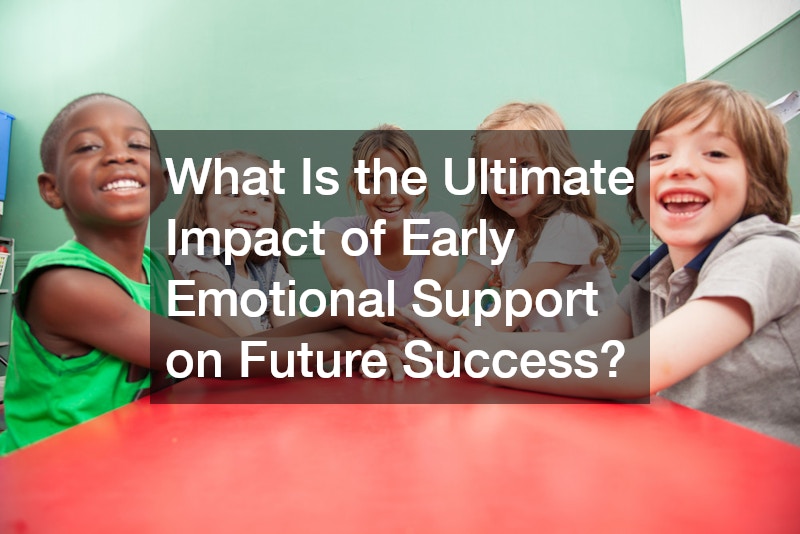
What Is the Ultimate Impact of Early Emotional Support on Future Success?
The ultimate impact of early emotional support is the creation of highly resilient, empathetic individuals equipped to handle the complex social dynamics of formal schooling. To conclude, fostering strong social and emotional foundations is not a supplementary benefit of early education; it is the core objective dictating future academic viability. When educational institutions deliberately cultivate emotional intelligence, they prepare young learners to face inevitable failures with grace, collaborate effectively in diverse groups, and advocate for personal needs. These are the exact soft skills modern professional environments increasingly demand. Children who learn to navigate their internal landscapes early on are statistically less likely to experience severe behavioral issues and more likely to achieve personal fulfillment. Ultimately, prioritizing the whole child through dedicated emotional instruction ensures students do not just survive the demands of future endeavors, but actively thrive.